
Typical symptoms
- Sharp pain radiating to one leg (sciatica) or arm
- Pain worsens with coughing, sitting, leaning forward
- Localised lower back or neck stiffness
- Pins and needles or numbness in a precise nerve territory
SPINE CONDITION
That electric pain shooting down your leg or arm, the kind that turns a simple cough into a jolt, often comes from a herniated disc. It happens when the gel-like core of a spinal disc pushes through its outer ring and presses on a nerve root — the source of the radiating sciatica or brachialgia. The reassuring part: with the right care, most people recover fully.
Symptoms depend on the level (lumbar, cervical) and the size of the herniation. Most flare-ups resolve within 6 weeks; persistent or progressive symptoms require imaging.
Discs degenerate naturally with age. Repetitive loading, sedentary posture, heavy lifting and a genetic predisposition all accelerate the process. A single forceful movement can then tear the annulus and let the nucleus push out.
Most herniations are confirmed on MRI. The clinical exam (Lasègue, dermatomal weakness, reflex changes) determines whether the imaging finding matches the symptoms — a critical step before considering surgery.
We always start with the least invasive option that delivers durable relief. Surgery is reserved for cases where conservative care has failed or red flags are present.
Stage 1
Targeted physiotherapy, postural rehab, NSAIDs and, if needed, epidural infiltration under imaging guidance. 80 % of herniations improve at this stage.
Stage 2
Endoscopic or microscopic discectomy through a small incision. Outpatient procedure in most cases — return to office work within 2 to 3 weeks.
Stage 3
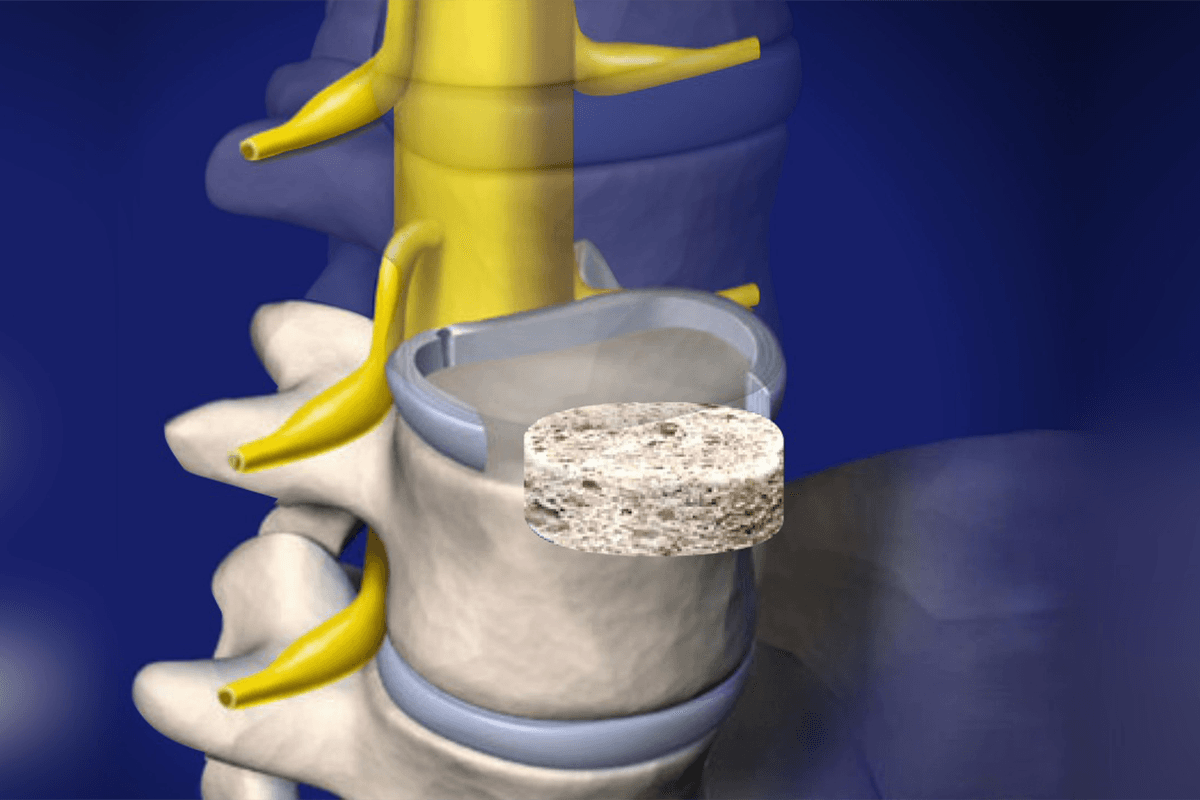
When the disc is severely degenerated or unstable, total disc replacement or single-level fusion restores stability while preserving as much motion as possible.
Surgical technology
Dedicated international slots reserved with our French partner surgeons — no 12 to 18 month waiting list.
Minimally invasive procedures, intra-operative imaging and the latest implants — often unavailable locally.
Coordination from Montréal to France in French and English, with your home physician kept in the loop.
Detailed pricing before any procedure, insurance support and no hidden fees.
Step 1
45-minute appointment with our clinical nurse specialist to review imaging, symptoms and history.
Step 2
Your case is shared with the most relevant French spine surgeon. Treatment plan delivered within 48 hours.
Step 3
Concierge organises stay, transport and admission. Surgery takes place in a partner centre of excellence.
Step 4
Post-op recovery in Québec with shared follow-up between Franchir's team and your home physician.
Patient story
“Supported from start to finish”
Marcel Mazaltarim (Neurothérapie Montréal) and Benoit Dubuc look back on a Quebec-to-France care pathway: first contact, the stay in Poitiers, surgery, post-op follow-up and the journey home — end-to-end support with Franchir.
Send us your imaging and medical history. A specialist reviews your file and confirms whether surgery is the right option — for free.
Published · Updated