Canada–France pathwayFRANCHIRNeurothérapie Montréal

BACK SURGERY

Back surgery in France, technique by technique

Decompression without an implant, motion-preserving implants, and fusion when a segment has to be stabilised. Franchir connects patients from Québec with French spine surgeons — after a file review, never by default.

Informational page. Only the surgeon, after reviewing your imaging and clinical history, decides whether an operation is indicated and which one. No outcome is guaranteed.

Cervical or lumbar spine

On this page, back surgery covers the lumbar spine and the cervical indications the network already treats. The level changes the approach, the implant and the length of stay — not the rule: confirm first that surgery actually solves the problem.

Cervical surgery

Cervical herniation, cervicobrachial neuralgia, disc disease. In France, cervical disc prostheses (including viscoelastic CP-ESP devices, EU-authorised since 2005) are widely performed. A posterior endoscopic foraminotomy is described for selected cases. A cervical prosthesis is also available privately in Canada (CAD 28,000–45,000+).
Neck pain

Lumbar surgery

Stenosis, herniation with sciatica, spondylolisthesis, disc disease. The surgical-options page sets out what Canadian private care offers (discectomy, fusion, a lumbar prosthesis that is rarely proposed) and what partner surgeons add: TOPS, IntraSPINE, B-Dyn, Barricaid, LP-ESP, 4K biportal endoscopy.

Lower back pain

Three families, not a single operation

Fusion is not the only category. Franchir guides distinguish three families: simple release without an implant, motion preservation with an implant, and fusion. In Canada, the decision matrix often steers toward fusion. In France, Dr Gilles Dubois first assesses whether a motion-preserving option is realistic. The decision stays surgical.

NO IMPLANT

Decompression: remove the compression, keep the segment mobile

When instability is minimal and the main problem is a localised nerve compression (herniation, foraminal stenosis, moderate lumbar stenosis), decompression alone targets the mechanical cause without locking the level. The instability page places it before fusion when the segment is still stable.

Decompression and discectomy

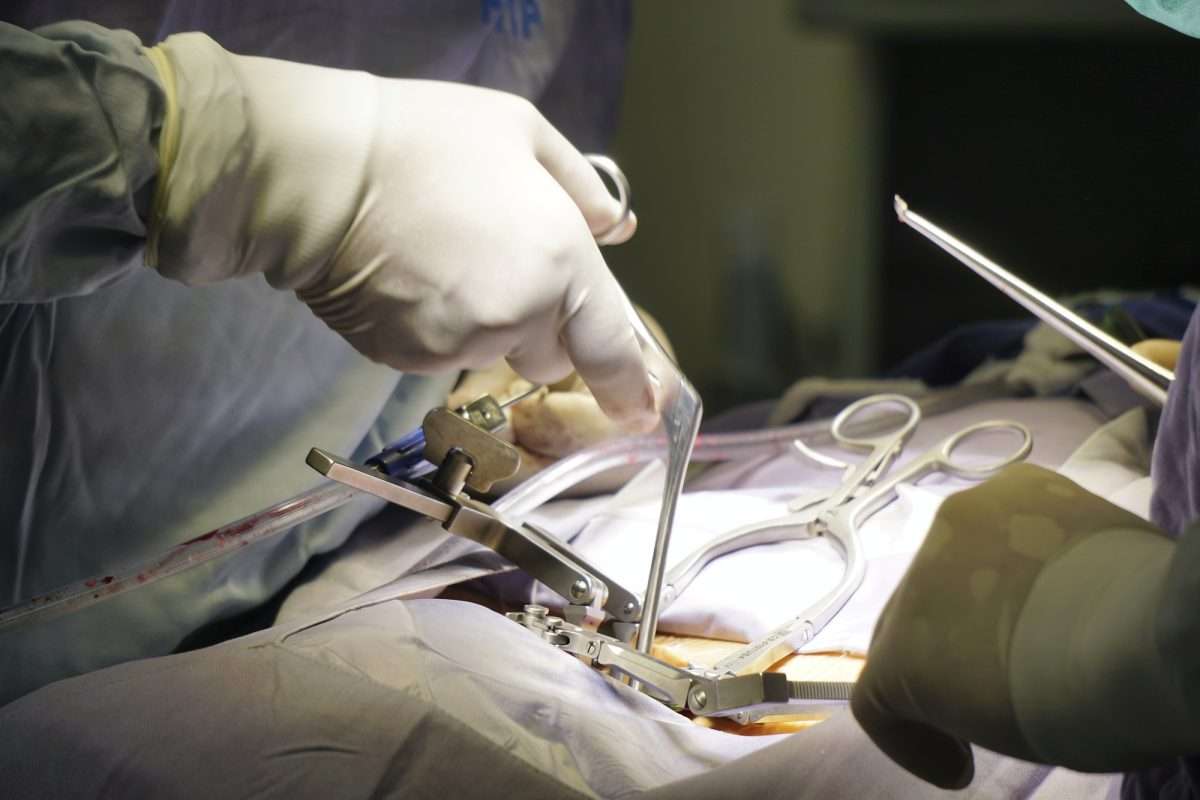
Microsurgery or endoscopy to free a nerve root or remove the disc fragment causing symptoms. The Franchir video shows a nerve-release procedure narrated in the OR by three surgeons, focused on anatomical integrity and mobility.

  • Used when the segment is stable and a nerve root is compressed.
  • Endoscopic or microsurgical discectomy through a small incision: the herniated-disc page describes it as usually a day case, with desk work in 2 to 3 weeks.
  • Stay in France for endoscopy or discectomy: 3 to 5 days, from the pathway page.

Herniated disc

Live from the OR — Nerve release, anatomical integrity, mobility preservation: 3 surgeons

4K biportal endoscopy

Two 1–2 cm portals, a 4K camera, and no significant muscle stripping. Same-day mobilisation for selected cases. No Franchir video films this gesture specifically: the still is the one already used on the site.

  • Performed notably at Clinique d'Occitanie and Clinique de l'Union.
  • In Canada: described as very limited on the comparison table.
  • Endoscopy does not replace an open approach when deformity or multi-level fusion requires it.

Spinal stenosis

Endoscopic spine surgery

Minimally invasive surgery (MIS)

Incisions of 2–4 cm and tubular instruments. Microscopic or endoscopic laminectomy through a small midline incision targets the responsible segment while aiming to preserve stability.

  • Less muscle injury than a wide open approach, as the site describes minimally invasive techniques.
  • The Québec lower-back page also lists image-guided injections and facet rhizotomy before or instead of surgery.

Lower back pain

Minimally invasive spine surgery (MIS)

Open approach

A wide exposure, the reference approach for complex cases. It remains indicated for some deformities and multi-level fusions, when endoscopy or MIS cannot do the job.

  • The choice between endoscopy, MIS and open follows the condition and the surgeon's experience.
  • It is not a failure of minimally invasive care. It is the tool that matches the anatomy.
Open spine surgery (conventional approach)

DYNAMIC IMPLANT

Preserve motion instead of locking the segment

These implants stabilise without a classic fusion. TOPS, IntraSPINE, B-Dyn, Barricaid and LP-ESP hold no active Health Canada licence (MDALL, September 2026). ProDisc-L and ProDisc-C prostheses are licensed. An unlicensed device can, in Canada, go through the Special Access Programme — that is not the usual route.

TOPS — lumbar facet arthroplasty

A posterior implant that stabilises after decompression without fusion. The video is filmed in the OR with Dr David Brauge at Clinique des Cèdres.

  • Stated indication: grade I degenerative spondylolisthesis with stenosis, at L4-L5 or L5-S1.
  • FDA June 2023 (PMA P220002). Randomised trial cited on the options page: 85% composite success versus 64% for fusion at 2 years (Cleveland Clinic). That figure describes the trial, not a Franchir promise.
  • Indicative duration 60–90 min. Cited recovery: 4 to 6 weeks. Stay in France for TOPS: 5 to 7 days.
  • Two O-Arms at Clinique des Cèdres — the only private French facility cited with that setup, on the options page.

Spinal instability

Live from the OR — Dynamic lumbar stabilization (TOPS) with Dr. Brauge

with Dr Brauge

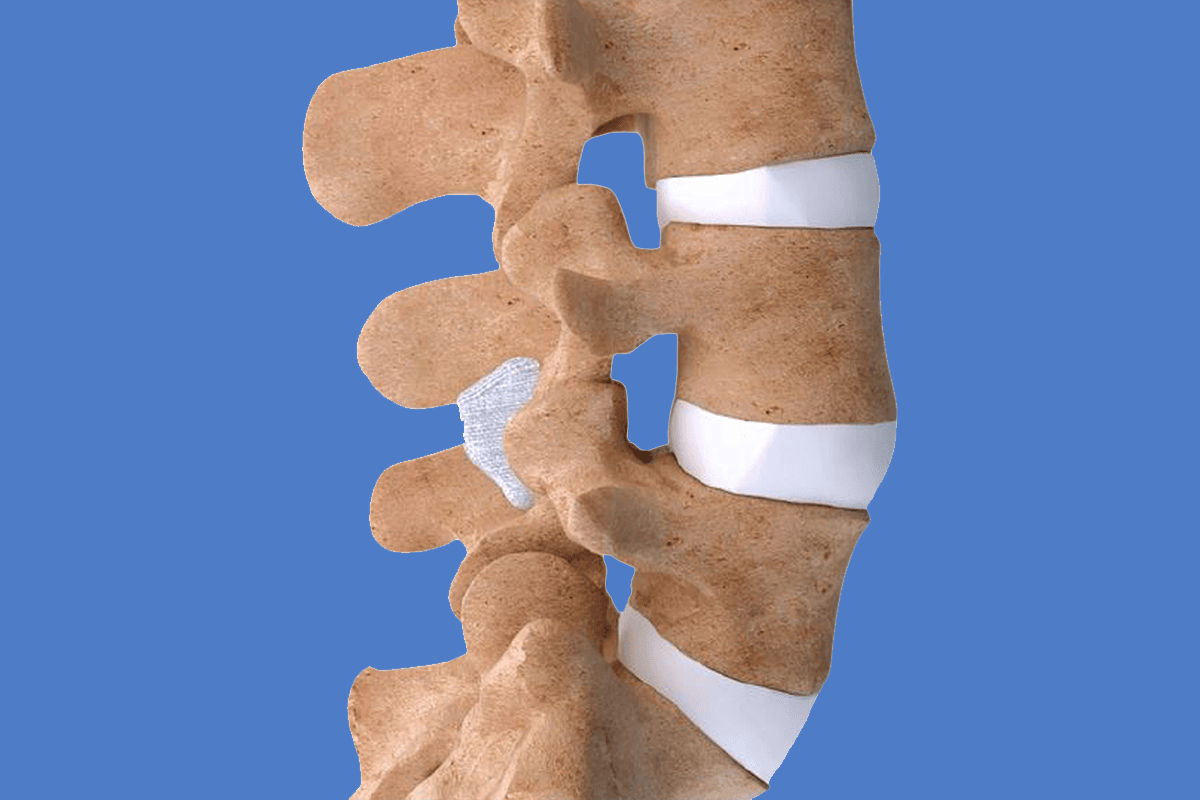
IntraSPINE — interlaminar stabilisation

A soft interlaminar silicone spacer (CE-marked, Cousin Biotech), without fusion, described as reversible and with limited muscle disruption. No Franchir video shows the implantation.

  • Dr Doan Cô-Minh, Polyclinique Oréliance (Saran): implant in use since 2007. Controlled clinical study of 198 patients — this site does not publish a success rate for that study.
  • EOS edge on site, up to 8 times less radiation than a CT scan.
  • Stay in France: 5 to 7 days, as for the other dynamic stabilisations on the pathway page.

Spinal stenosis

Interspinous device (Intraspine) for soft stabilization

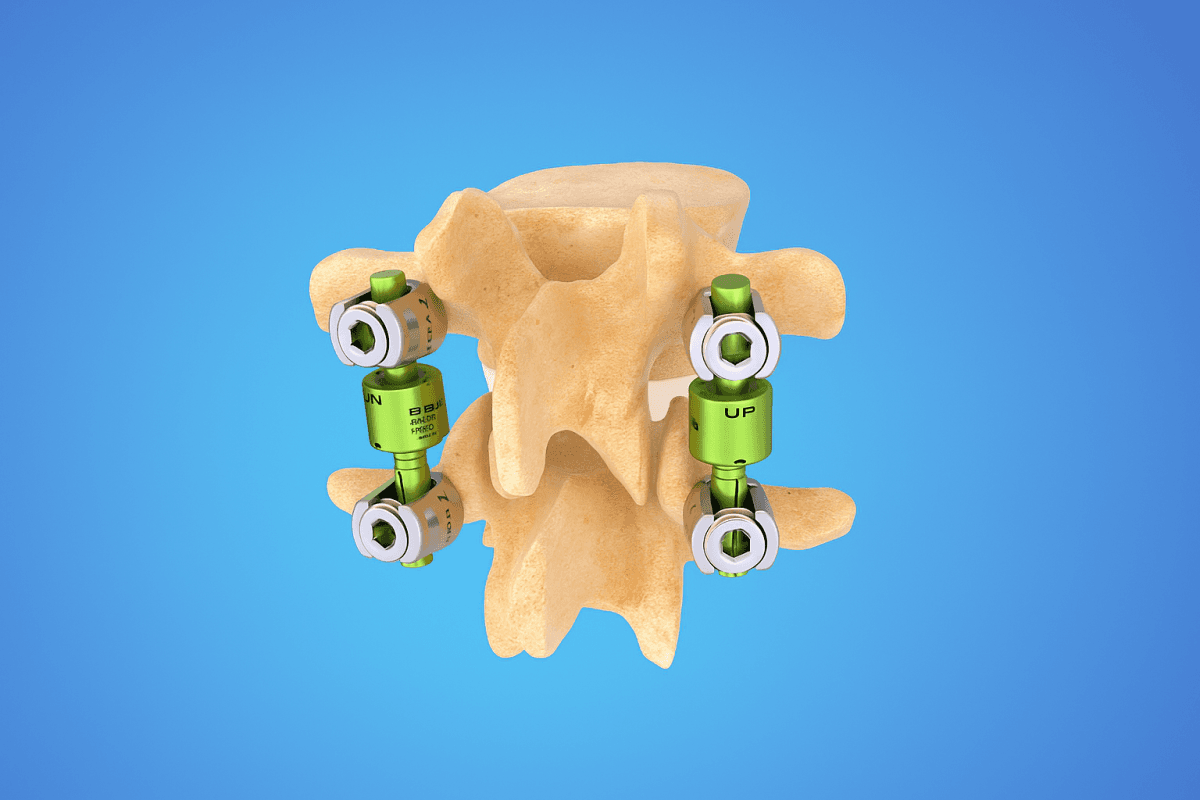
B-Dyn — dynamic pedicle rod

Pedicle screws and a dynamic rod (S14 Implants, Pessac) for controlled micromotion. No Franchir video shows the implantation.

  • Convertible to fusion with the same screws if the situation changes.
  • Indicative duration: 60–90 min. Stay: 5 to 7 days.
  • Not licensed by Health Canada (MDALL, September 2026).

Which implant for my case

B-Dyn posterior dynamic stabilization system

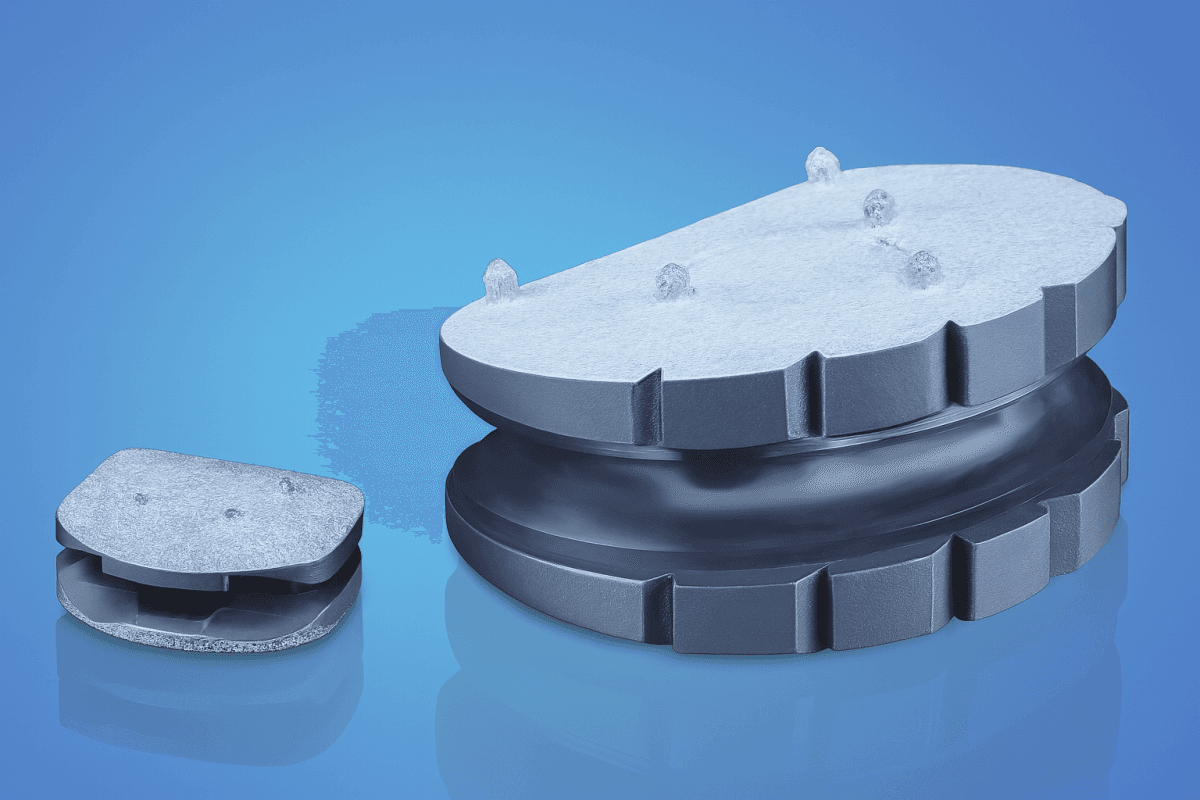
LP-ESP — viscoelastic lumbar disc prosthesis

A 6-degrees-of-freedom prosthesis (FH Orthopedics / Spineway), EU-authorised since 2005. Anterior approach, 5–8 cm incision, up to 4 levels. The two Franchir videos illustrate L5-S1 disc replacement and the muscle-sparing anterior approach.

  • Dr Jean-Patrick Rakover, Clinique du Pré (Le Mans), a 4-surgeon spine unit. Former chief resident at Pitié-Salpêtrière.
  • In Canada, the lumbar prosthesis (ProDisc-L) is licensed but rarely offered privately.
  • Stay in France for a lumbar disc prosthesis: 5 to 8 days.
  • Benoît's account (L5-S1 prosthesis) is in the stories section below.

Herniated disc

L5-S1 disc replacement: a tailored care pathway to restore your mobility

Anterior spine approach: preserving the muscles to restore mobility

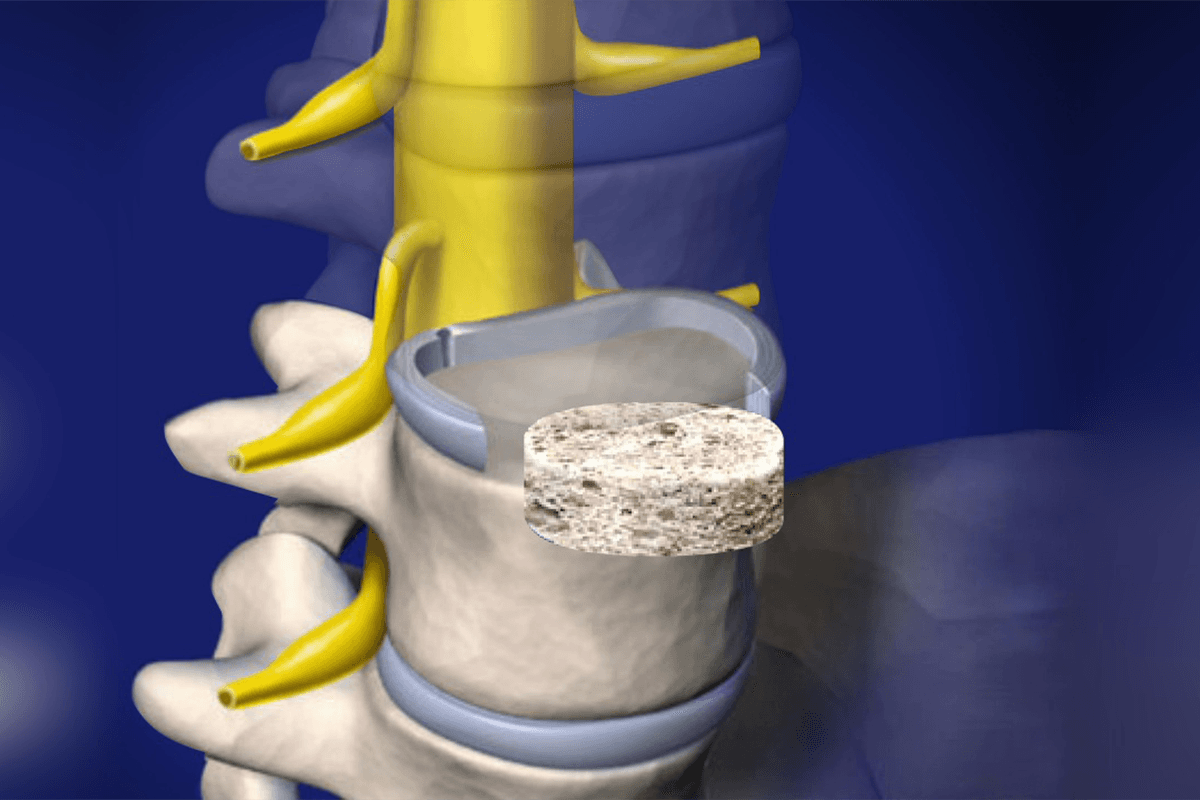
CP-ESP — viscoelastic cervical disc prosthesis

Same ESP family as LP-ESP: a viscoelastic prosthesis, 6 degrees of freedom, EU authorisation since 2005. The site does not name a specific surgeon or operative time for CP-ESP, and the Franchir channel has no dedicated video.

  • A cervical prosthesis, in general, is available privately in Canada (CAD 28,000–45,000+) and is performed in France.
  • Level, number of levels and model are chosen by the surgeon after the file review.

Neck pain

Cervical disc prosthesis (ESP concept)

Barricaid — annular closure

An annular closure device after discectomy, for large annular defects of 6–10 mm. The options page states that it reduces the risk of recurrence. No Franchir image or video for this procedure.

  • Paired with a discectomy in the second-opinion guide, not as a universal alternative to fusion.
  • Not licensed by Health Canada (MDALL, September 2026).

Surgical options

FUSION

Fusion: lock the segment that no longer holds

Fusion removes pathological motion at one or more levels. It is discussed when slip progresses, instability is mechanical, or a dynamic option is not realistic. It is permanent at the fused segment. Adjacent-level degeneration exists; the instability page notes that its impact is often overestimated when sagittal balance is preserved, disc height is restored and the fusion is kept short.

ALIF — anterior approach

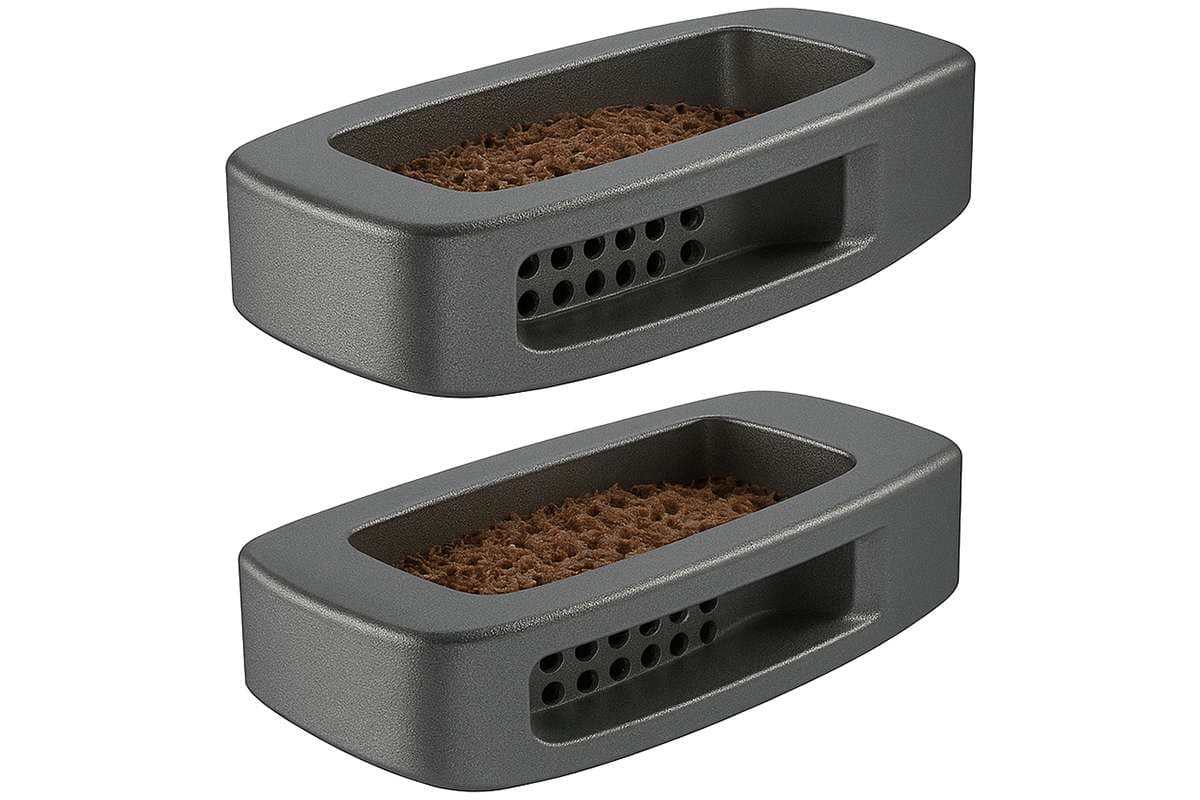
Anterior lumbar interbody fusion through the abdomen. The anterior route is also used for lumbar disc prostheses; this card is the fusion. The site's anterior-approach video illustrates muscle preservation for a prosthesis, not an ALIF, so it sits above with LP-ESP.

  • Named with TLIF and OLIF on the spinal-instability page.
  • Modern fusion on that page combines 3D navigation, percutaneous screws and interbody cages.

Spinal instability

Anterior lumbar interbody fusion (ALIF) cage

PLIF / TLIF — posterior approaches

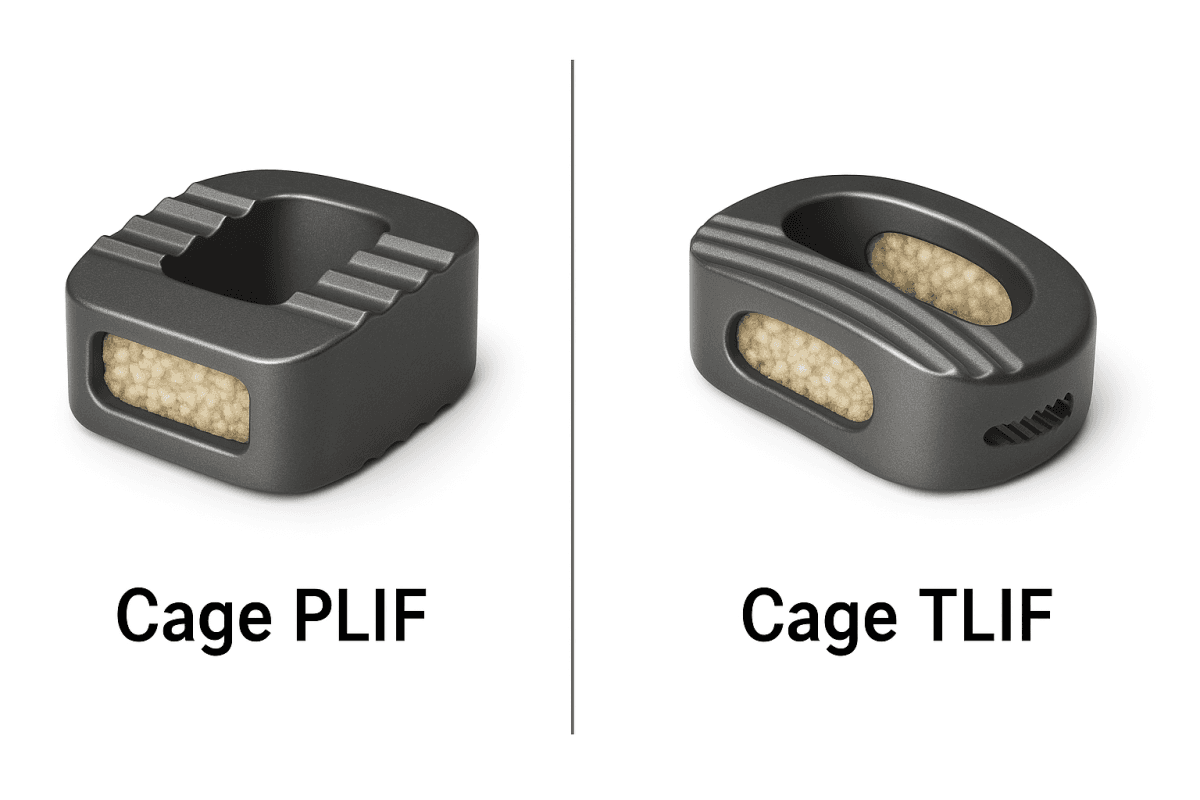
Interbody fusion from the back, with pedicle screws. TLIF is the posterior fusion most often named in Franchir guides (decompression plus TLIF, or ALIF / TLIF depending on the case).

  • For a segmental fusion, the instability page describes walking the same day, a hospital stay of 2 to 4 nights, desk work in 3 to 6 weeks and activity reintroduced after 3 months with physiotherapy.
  • Those intervals describe that scenario, not every multi-level fusion.

Spinal instability

Posterior / transforaminal lumbar interbody fusion (PLIF/TLIF) with pedicle screws

XLIF / LLIF — lateral approach

An approach through the flank rather than the back or the abdomen. The spine FAQ groups XLIF with lateral routes, alongside some endoscopic techniques. OLIF is named with TLIF and ALIF on the instability page, without a separate technique sheet.

  • The route depends on anatomy, level and technique.
  • Partner surgeons use intraoperative navigation to place screws and implants.

Spine surgery technologies

Lateral lumbar interbody fusion (XLIF/LLIF)

Timelines and orders of magnitude

Three columns. Public waits and Canadian private orders of magnitude reuse figures already published. The Franchir timeline is this page's own figure. No Franchir surgical package price on this page: the quote comes after the medical review.

Timelines and orders of magnitude
CriterionQuébec — publicCanadian private (indicative)Franchir — France
Time to surgeryOften 12–18 months (patients Franchir has accompanied)Fraser Institute 2024: 30-week median, 57 weeks for orthopaedic surgery6 to 8 weeks in total, from file validation to surgery
Decompression / discectomyCovered if the public pathway proceedsCAD 10,000–20,000Performed. Quote after review.
Cervical disc prosthesisDepends on the centreCAD 28,000–45,000+Performed, including CP-ESP. Quote after review.
Lumbar disc prosthesisLimited access depending on the centreProDisc-L licensed, rarely offeredLP-ESP and other models, including multi-level. Quote after review.
FusionPublic pathwayCAD 40,000–80,000Including minimally invasive. Quote after review.
TOPS, IntraSPINE, B-Dyn, Barricaid, LP-ESPNot licensed (MDALL, Sept 2026)Not licensedPerformed by partner surgeons. Quote after review.
First stepReferrals inside the public systemDepends on the clinicMedical file review, about CAD 700
RAMQLocal public care coveredOutside RAMQPlanned care abroad is not covered. Private insurance may apply.

The 12-to-18-month waits reflect the experience of patients Franchir has accompanied. The 6-to-8-week figure is the total time from file validation to surgery, subject to eligibility, recent imaging and theatre slots. Total cost in France (surgery, stay, coordination) is often equivalent to or lower than Canadian private care — with no price published before the quote. The medical quote has no hidden fees; travel and lodging remain yours to cover, with help organising them.

Four steps, from Québec and back

  1. 01

    Request a second opinion

    Today

    Eligibility form, about 3 minutes. Attach the imaging you have, or say if you do not have it yet. No commitment at this stage.

  2. 02

    A human first call

    Within a few business days

    Neurothérapie Montréal calls back: complete file, questions, next steps. A bilingual Canadian contact.

  3. 03

    Medical review, then surgery in France

    CAD 700, then 6 to 8 weeks in total

    Review by partner surgeons and a documented opinion. From file validation to surgery, the wait is 6 to 8 weeks in total, if you are eligible and accept the quote. Imaging required: MRI or CT under 12 months old.

  4. 04

    Return and follow-up in Québec

    After surgery

    Operative report, prescription, follow-up calendar. Video visits with the French surgeon, rehabilitation in Québec, a link to your family doctor.

The same pathway as the Québec hub. The patient-pathway page spells out a five-step version, length of stay by technique, and the centres. Detailed patient pathway

Marcel Mazaltarim (Neurothérapie Montréal) and Benoit Dubuc look back on a Quebec-to-France pathway: first contact, the stay in Poitiers, surgery, follow-up and the return home.

Marcel Mazaltarim and Benoit Dubuc: looking back on spine surgery in France

Where surgery takes place

Franchir is not tied to one facility. The centre follows the condition and the technique. Partner surgeons Franchir works with perform an average of 320 operations a year per surgeon, with sub-specialisation, in accredited private clinics (Ramsay Santé, Elsan, HAS certification).

Clinique des Cèdres, Toulouse (Ramsay Santé)

TOPS, complex spine surgery

2 O-Arms — the only private French facility cited with that dual setup

Dr David Brauge

24 operating rooms · 1,200 m² rehabilitation floor

Clinique de l'Union, Toulouse (Ramsay Santé)

Neurosurgery, endoscopy

Neuronavigation, fluorescence microscopes, laser, electrophysiology

Dr Gilles Dubois

More than 3,500 neurosurgical procedures a year (centre figure)

Polyclinique Oréliance, Saran

IntraSPINE, dynamic stabilisation

EOS edge

Dr Doan Cô-Minh

IntraSPINE since 2007

Polyclinique de Poitiers (Elsan)

ICV NoA (created 2024)

Loop-X, endoscopy, PEV monitoring, EOS

Drs Teyssedou and Swennen

Clinique du Pré, Le Mans

LP-ESP, disc prostheses

Spine unit, 4 surgeons

Dr Jean-Patrick Rakover

Former chief resident, Pitié-Salpêtrière

Other network centres

According to condition and technique

Other French facilities are used depending on the indication.

Franchir network

The pathway page refers to more than 15 partner centres.

Pathway and centres

Surgeons already named on the site

Franchir does not publish long biographies here. The points below repeat only the centres, techniques and roles already written in the guides. Surgeons are independent specialists: Franchir is paid for coordination, not for the clinical decision. You meet the surgeon by secure video before you fly; the decision to operate is made with you.

DG

Dr Gilles Dubois

Neurosurgery, endoscopy

Clinique de l'Union, Toulouse

  • Independent scientific advisor for the file review.
  • Surgical navigation cited on his theatre setup.
  • First assesses whether a motion-preserving option is possible.
DD

Dr David Brauge

TOPS, complex spine

Clinique des Cèdres, Toulouse

  • Dynamic TOPS stabilisation filmed in the OR (video above).
  • Two O-Arms on site.
DD

Dr Doan Cô-Minh

IntraSPINE, dynamic stabilisation

Polyclinique Oréliance, Saran

  • IntraSPINE since 2007.
  • Controlled clinical study of 198 patients, with no success rate published on this site.
  • The interview video covers innovative surgery and the pathway, not a filmed implantation.
DJ

Dr Jean-Patrick Rakover

LP-ESP disc prostheses

Clinique du Pré, Le Mans

  • Spine unit of 4 surgeons.
  • Former chief resident at Pitié-Salpêtrière.

Franchir interviews: Dr Gilles Dubois, and Dr Doan Cô-Minh on innovative surgery and the patient pathway.

  • In conversation with Gilles Dubois, a pioneer of spine surgery

    with Dr Gilles Dubois

  • Interview — Dr. Doan Co Minh: insights on innovative surgery and the Franchir patient journey

    with Dr Doan Co Minh

Conditions already documented

Each page describes the signs, what is discussed before surgery, and the link with France. Surgery is not the automatic conclusion.

These situations are assessed case by case. If surgery is not the best option, the file review says so. The CAD 700 is still due; you keep a documented opinion. If surgery later proceeds through Franchir, that amount is deducted from the procedure.

Quebec patients, on the Franchir channel

Three videos from the @franchir_tv channel. They are individual accounts, not typical results. More stories are on the dedicated page.

  • Luc on his back surgery in France: “it changes a life”

  • L5-S1 disc replacement: Benoît, a Quebec patient, on his new pain-free life

  • Jean-François on his spine surgery in France: “a second chance”

FAQ

Precise questions on back surgery

Your file, before any surgery date

Do you have a recent MRI or CT (< 12 months)? *
I was offered a spinal fusion *

Your file is reviewed by an independent scientific advisor and our partner surgeons. No surgical commitment at this stage.

NO SURGICAL COMMITMENT

The file review comes before the operation

About CAD 700. A reply within 2 business days of the form. The full quote follows if the surgeons retain an indication.

Published